Scholarship Tips · 31 Oct 2026
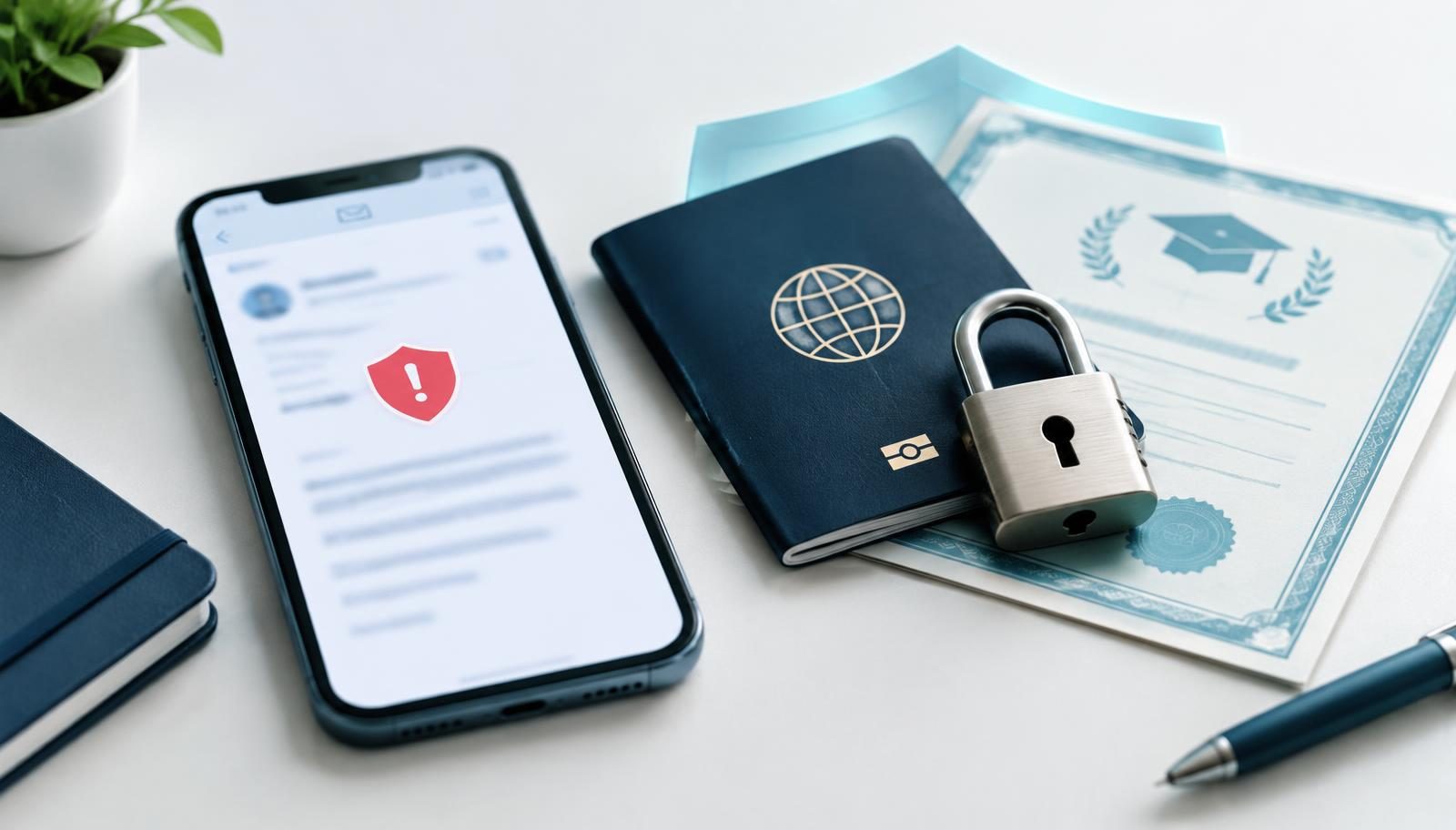
Most scholarship opportunities are genuine. Unfortunately, the strong demand for international study also attracts people who try to take advantage of hopeful students and their families. Fake offers can cost money, waste valuable time and put personal documents at risk.
The good news is that most scams share recognisable warning signs. This guide explains what to look for, how to protect yourself and what to do if something goes wrong.
1. Common Signs of Scholarship Fraud
Be cautious if a scholarship offer includes any of the following:
- You are told you have won a scholarship you never applied for
- You are asked to pay money to apply, to "secure" a place or to release funds
- The offer pressures you to act immediately or keep it secret
- The message comes from a free personal email address rather than an official one
- The website has spelling mistakes, unusual web addresses or no clear contact details
- The provider cannot be found on any official university or government website
One warning sign does not always prove fraud, but it is a strong reason to stop and verify before going further.
2. Fake "Guaranteed Scholarship" Offers
No genuine provider can promise a scholarship before your application has been assessed. Competitive scholarships are decided by selection committees according to published criteria.
Be very careful with anyone who says:
- "Scholarship guaranteed or your money back"
- "We have special contacts inside the university"
- "Only a few places left — pay today to reserve yours"
3. Suspicious Application and Email Links
Scammers often send links that lead to fake pages designed to collect your details or payments.
- Hover over or long-press a link to see its real destination before opening it
- Check that the web address belongs to the real provider, letter by letter
- Instead of clicking a link in a message, open the official website yourself and navigate to the scholarship page
- Do not enter passwords, bank details or passport numbers on a page you reached from an unexpected message
4. Unverified Agents and Impersonation of Universities
Some agents and consultants provide real, helpful services. Others misrepresent themselves or claim connections they do not have. Some scammers even pretend to be university staff or embassy officials.
To protect yourself:
- Ask an agent which universities they officially represent, then check with those universities directly
- Confirm any offer letter by contacting the university's admissions office using details from its official website
- Be wary of people who contact you only through social media or messaging apps
- Remember that embassies and universities generally communicate through official channels
5. Advance Payments and "Processing Fees"
Payment requests are one of the clearest warning signs. Watch out for requests to pay:
- A "processing", "registration", "reservation" or "release" fee to receive a scholarship
- Money into a personal bank account or mobile wallet
- Fees in gift cards, cryptocurrency or through untraceable methods
- An unexpected amount after you have already been told you "won"
Some legitimate costs do exist — for example, certain universities charge admission application fees, and official language tests have their own fees. These are explained on the official website and paid through official systems. The US government's Federal Student Aid scam guidance also warns students to be careful with anyone charging for help that should be free.
6. Protect Your Passport, Documents and Personal Information
Your passport, certificates and personal details are valuable. Misused documents can lead to identity fraud.
- Share copies only with official providers, universities or verified application portals
- Never send original documents unless an official process clearly requires it
- Consider adding a watermark such as "For [University] application only" to scanned copies where appropriate
- Use strong, unique passwords for application portals and your email account
- Do not share one-time passwords (OTP) or verification codes with anyone
7. Verify Scholarship Offers Using Official Sources
Before accepting any offer, confirm it independently:
- Find the provider's official website by searching for it yourself
- Check that the scholarship appears on that official website
- Contact the provider or university using the contact details listed there
- Check government study portals where available, such as Study in Japan, Study in Korea or the Commonwealth Scholarship Commission
- In Bangladesh, the University Grants Commission is an official source of information about higher education institutions
8. What to Do If You Suspect a Scam
If you think you have been targeted or have already shared information or money:
- Stop all contact and do not send any more money or documents
- Keep evidence — save emails, messages, receipts, website addresses and screenshots
- Contact your bank or mobile financial service immediately if you have made a payment
- Change passwords for any account you may have exposed
- Tell the real institution whose name was used, so they can warn other students
- Report it to the police or relevant authorities in your country. If the scam involves a UK organisation, Action Fraud is the UK's national reporting centre; for US-related internet fraud, the FBI's IC3 accepts reports
Being targeted by a scam is not your fault. Reporting it quickly can help protect you and other students.
9. Scholarship Scam Prevention Checklist
Before you share documents or pay anything, confirm that:
- I applied for this scholarship myself through an official website
- The provider and the scholarship both appear on an official website
- I have checked the web address and email domain carefully
- No one has guaranteed me a scholarship in return for payment
- Any fee is explained on an official website and paid through an official system
- I am not being pressured to act immediately or keep the offer secret
- I have verified any agent with the university they claim to represent
- I am sharing documents only with official, verified recipients
- I have not shared passwords, OTPs or verification codes
- I know how to report a scam if something feels wrong
Staying alert does not mean being afraid of every opportunity. It means taking a few careful steps so you can focus your energy on genuine scholarships — and apply with confidence.